Who am I to . . . ?
by Veronica Wiman and Jeremiah Day
Los Angeles Contemporary Exhibitions (LACE) presented Civic Matters, a two-week cultural exchange and residency project, that bought together an international curatorial team with a diverse group of artists and collectives from Sweden, Finland and Los Angeles to explore the complex roles of art, craft, design, architecture, and community in contemporary society. Civic Matters aimed at raising questions about the production of art, craft and design as it relates to the distinct cultural histories and traditions found in the United States and in Scandinavia, and at providing an opportunity for participants to explore the dynamics of artistic collaboration. Civic Matters was organized by Brett Littman, Irene Tsatsos, Veronica Wiman, and Zandra Ahl / Craft In Dialogue. (adapted from LACE Press Release, 12/12/05)
“Dear Veronica,” the letter sent to me on December 10, 2005, from
Jeremiah Day, leaves me with another question: Who am I to . . . ?
Just when I am in the middle of production and coming closer to the second
phase in Civic Matters—an international exchange project and production
site in Los Angeles—Jeremiah sends me his “proposal” for
Civic Matters. At Christmastime in sunny Los Angeles, this comes as a great
surprise and inspiration. As before, Jeremiah pops up at the end, nearly the
day after—ever thoughtful and personal—and twists my mind slightly,
causing me to stop for a moment and wonder about what it is I am up to.
Civic Matters started in September 2005 with the launch of a blog (artleak.org/civicmatters)
meant to encourage an ongoing communication between participants in Los Angeles,
Stockholm, Helsinki, and Turku. The project is characterized by its organically
developing process, which reflects the personal and collective desires and
ideas of Civic Matters participants. Civic Matters embodies three distinct
steps or phases of process: communication, cultural exchange and proposal
development, and proposal realization/production. From its inception, Civic
Matters has taken place through dialogue among the participating artists and
collectives.
When talking about this project for the first time with Jeremiah in Amsterdam
nearly a year ago, I was just as excited and eager as I am now. I wanted to
hear his thoughts on creating a project such as Civic Matters in Los Angeles,
as well as his feelings about the city in general. I never noticed his expression
as he recoiled.
So, who am I to approach the urban and political environment of Los Angeles, together with a strong group of co curators and artists and practitioners from L.A., Stockholm, and Finland, and to believe that we can come to understand the culture of the city and initiate social change through aesthetic means? I am Swedish, white, a woman with an academic background working within an international contemporary art scene. I have never lived in the United States longer than a couple of months at a time—now in Los Angeles and previously during a residency in New York, and both times in contemporary art environments. My first encounter with Mexican culture was last year when I travelled to Baja California for the Christmas holidays, and I don’t have a driver’s license . . . According to Jeremiah’s questions and criteria, I am probably clueless and doomed to fail in this initiated attempt.
Jeremiah, I know that there is a lot I should do, eat, see, hear, read, etc. Every day I smell the fumes of Los Angeles, buy my LA Times, ride the bus or my bike down on Sunset Blvd. to Hollywood, sit in the LACE office and talk to colleagues and others I encounter. Weekends are devoted to domestic tasks such as going to the farmers’ market and more work-related practice, which I do at home, in local cafés or visits to exhibitions and other excursions—so it is pretty much the life I live anywhere. I have done my best to understand where I’m coming from and what context I am jumping into. It may be that my attitude is still completely utopian and naive. That’s fine—I like that and don’t have one idea in mind of what the result shall be, other than an exchange of knowledge on a personal level. I believe in the sources of the exchange, and what can come with bringing a group of 30 people with various backgrounds together to interact with each other in a specific environment.
At this point it looks as though we are handling the social
and political issues addressed in the Civic Matters framework, and the realities
of Los Angeles as the participants understand them, by presenting various
questions and cultural material. Fruit collected in public space in Silver
Lake will be used to make guacamole at Craft Night; personal souvenirs of
L.A. will become pink latex balloons together with the Hollywood community;
interpretations of several conversations on Los Angeles, public space, art,
and social practice will be digested and included in the next issue of the
Civic Matters Newspaper; The Shed Research Institute invites us to practice
gun shooting at Los Angeles gun Club and the Rock Women for Reich campaign
might change the future life in Los Angeles…
This is one attempt to approach Los Angeles with a civic interest, simply
through my collaboration with Angelenos and Scandinavians, toward a generous
and curious mission—to gather and suggest alternative realities of human
existence.
(Jeremiah, you are most welcome in the show . . .)
Veronica Wiman
Los Angeles, December 2005Dear Veronica,
Dear Veronica,
I, too, would have liked to participate in your “Civic Matters” project. But frankly I’m not sure how I could.
When you first mentioned it to me, I’m not sure if you noticed my face recoil in shock. Perhaps not, since I tried to hide it. You see, you and I could only meet in Amsterdam because Los Angeles civics had broken me. I was at the point where all I could do each day in L.A. was to stutter a new fact or revelation about the corruption and criminality that pass for public life there. When I left L.A. in 2002, I was mentally completely consumed by the city’s politics and had no practical answer to it.
Making art—in the sense of reified moments or objects—was
impossible for me in that city. Artists have studios to carve out a space
in which to work, and for me, despite the scale of Los Angeles, there was
no longer any space possible there.
The title of your project is itself a provocation. It would be like having
a show on peace in Grozny and then not mentioning that the city was at war.
Civics in Los Angeles means fraudulent elections in neighborhood council meetings,
police officers who literally murder with impunity, forty thousand homeless
people each night, and political machines so sophisticated that they are rarely
noticed, or even named.
An example: In Venice Beach in 1999 or so, the city began to give out citations for housing code violations. People would get tickets for having bad paint jobs on their homes, or poorly constructed porches. If they did not pay the ticket right away (each ticket was for $1,500, if I recall), it would double, and then double again after 60 days. Eventually the city would be authorized to put a lien on your house. These tickets were given out almost exclusively to elderly African-American and Latino home-owners. This was an explicit and conscious move on the part of city planners to push them out in order to redevelop the Oakwood section of Venice.
This plan was only stopped when James Hahn became mayor, not because he was “progressive,” but because he owed his election to the African-American vote. It was a form of political payback.
This is one small story that I only came to know through intensive personal involvement with local city politics. I only know one side of the story, of course—because when nothing is ever publicly represented, when no one is ever really informed about what is happening in the world around them, all you are left with are shadowy anecdotes. But think about your exhibition in this context, which is where you are. How do you propose to address systematic political corruption through design?
The Los Angeles Police Department was formed to destroy labor unions. The city planners of Los Angeles decided that they would build the local economy by undercutting the San Francisco labor market with a pliable workforce. The LAPD has from the outset been opposed to “the people”—this is part of its structure. How many men have been choked to death in police custody for “resisting arrest”? How many people shot on the street for the same? Everyone knows that you just don’t mess with these people, because if you do they will crush you.
The first labor organizer I worked closely with in San Francisco began his political career by working against police brutality in Long Beach. There the police had a long history of killing people in custody (as fictionalized in Charles Burnett’s film The Glass Shield), and it only became a scandal when they killed a football star. This man I met in San Francisco left Long Beach because the police told him he had to or they would kill him. And he believed them.
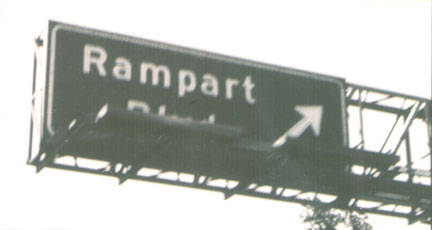
When the grand jury was formed to investigate the Rampart scandal, all of the records and documentation were stolen from the courtroom. This theft was not reported in the Los Angeles Times.
The media does not report what happens in the city. When my friend Fred Dewey organized a poetry festival that brought together the World Stage in Liemert Park, Self-Help Graphics in East L.A., Beyond Baroque in Venice, and other organizations in one program extending across the city, the LA Weekly would not even list it. When Ken Ehrlich, Avi Laiser, and Liz Falletta’s organization LA Hub opened up a public debate around a local public park, it was never covered in the newspapers. One could go on—but the point I’m trying to make is that in terms of the local press, what is really happening is, as a rule, not described.
Perhaps this helps explain to you how conflicted I could be
about a project on L.A. politics. On the one hand, I still feel a tremendous
commitment to the city and I also hope that culture is one space in which
some of these realities can be reflected and reflected upon.
But your project will not reflect the reality of the city. How could it?
The underlying political facts of the city are treated like rumors even by the people who live there. In general, people try to avoid “the system” in every sense. They don’t vote, they try to be respectful to the police, they don’t read the newspapers, and they try not to think about what is happening around them except for how it affects their ability to survive. In effect, they live like slaves, not free people.
Since no one really knows what is happening, the ignorance is not a result of amnesia or forgetting. And so there is no one to explain what is happening to you. I am only barely diagnosing the problem of people not knowing what is happening. In order for you to really learn about L.A. you’d have to study for years (and I don’t mean reading Mike Davis).
The local artists won’t be able to help because they don’t know anything either. Paul McCarthy can articulate an adolescent wail; Allen Sekula can sentimentally describe suffering; Ed Ruscha can give you dark humor. But all of those are just facets of an existential condition. The inability to describe the cause of the condition is itself a constituent part of it.
The art school Marxists from Valencia and the semioticians from Pasadena are just tourists. Or perhaps that’s too harsh. After all, I live in Holland now!
And Giovanni Intra is dead. He was the only one who probably could have explained to you the underlying logic to aping the system. How did emulating the vapidity and nihilism of the entertainment industry become an advanced artistic position? I have to say that his death is itself the most articulate statement from the young L.A. art scene.
There’s a guy in L.A. who played with Coltrane and now runs a drum repair store. You’d have to find him. Probably some labour union bureaucrat who’s organized all the prop builders could help.
You’d have to get Steve Yagman drunk and ask him questions.
You’d have to find out if Mark Ridley Thomas ever took money from the FBI.
You’d have to ask Roger Herman if he made any money on Chinatown real estate deals.
You’d have to watch all the Cassavetes movies, and then listen to all the Ice Cube records, and then go to Venice and find Herry Perry, and then go to Kansas City for James Ellroy, and then find Joe Frank, wherever he is.
You’d have to read the LA Times obituary on Gary Webb ten times.
Your ignorance of Gary Webb is not your fault—you are in a city that kills the truth, daily. (You can still look him up online, though.)
I don’t know what else you’d have to do before you
could use the word “civic” in L.A. without it being a meaningless
burp or just a mean joke.
Otherwise, you’re just part of the cover-up.
And so am I.
On second thought, I want to be in the show.
Jeremiah Day
Amsterdam, December 2005
©Veronica Wiman - Jeremiah Day, 2006
Veronica Wiman (b.1975 in Stockholm) is and independent curator based in Stockholm, originally from Sweden. For some years she has curated independently internationally. Her general interest lies in interdisciplinary art and socially integrated projects, exploring relational expressions and public space. She recently completed De Appel - CTP program in Amsterdam and recently curated Civic Matters at Los Angeles Contemporary Exhibitions, Radiodays at De Appel Foundation, Pure Consciousness – On Kawara in Bequia (St Vincent and the Grenadines).
Jeremiah Day (b.1974, Plymouth, MA, USA) is an American artist currently based in Amsterdam. From 2003-4, he was a resident at the Rijksakademie van Beeldende Kunst; from 2000-2002 he was artist-in-residence at Beyond Baroque Literary/Art Center in Venice Beach, California. There he founded the Beyond Baroque Working Group, and at the conclusion of his residency organized a festival The Great Silence - on the 10-year anniversary of the Los Angeles riots.